Whale Watching in Panama: When and Where to See Humpback Whales
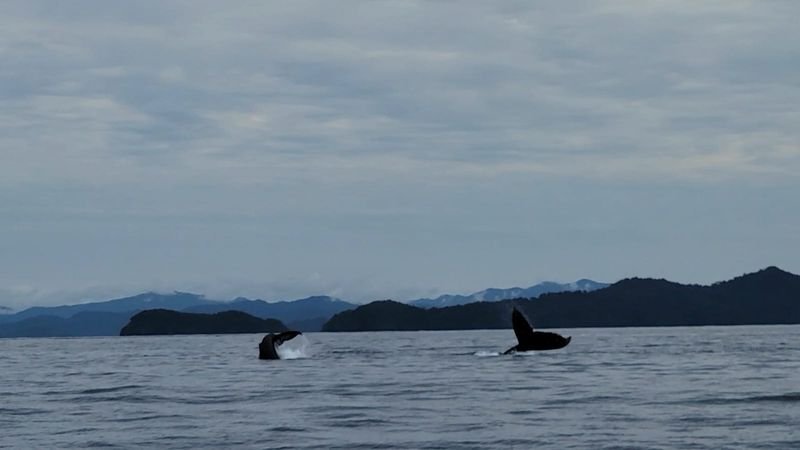
Few travel moments compare to a humpback whale breaching beside your boat. Panama is one of the best-kept whale-watching secrets in the Americas — thousands of humpbacks migrate to its warm Pacific waters to breed and calve.
When is the season?
Roughly July to October, peaking in August and September. Mothers with calves are a common sight, and dolphins tag along year-round. Sightings are never guaranteed — it’s wild nature — but in season the odds are excellent.
Where to go
The Gulf of Chiriquí around Coiba National Park is prime territory: protected, uncrowded and rich in food. Boats depart from Santa Catalina, and many Coiba tours combine whale watching with snorkeling stops and island beaches — so even a quiet whale day is still a spectacular one. The tours are run by local tour operators; we can get you to Santa Catalina in time for your boat.
Why Panama is special for whales
Most of the humpbacks that arrive between July and October come from the Southern Hemisphere. They feed in the cold waters off Chile and Antarctica and travel thousands of kilometres north to Panama’s warm Pacific to mate and give birth. Researchers also record a smaller number of Northern Hemisphere humpbacks here in the northern winter, which makes Panama one of the few places where whales from both hemispheres turn up.
Other places to see whales in Panama
- Las Perlas Islands, in the Gulf of Panama, reached by ferry or boat from Panama City.
- Pedasí and Isla Iguana, on the Azuero Peninsula, where boats leave straight from the beach.
- Boca Chica and the Gulf of Chiriquí islands, east of David: a quieter base with island lodges. We run shuttles from Santa Catalina and Boquete.
- Taboga and the Pacific entrance to the Canal, where whales are sometimes spotted from the ferry.
Watching whales responsibly
Panama has official rules for whale watching, and good operators follow them: boats approach slowly from the side, keep their distance (especially from mothers with calves) and limit the time they spend with each group. Choose a tour with certified guides and never ask the captain to chase a whale.
Tips for a good whale day
- If you are prone to seasickness, take a tablet before you board; the open-water crossing can be bumpy in the green season.
- Mornings usually bring calmer seas; afternoons bring wind and storms.
- A phone is fine for photos and a zoom lens helps with breaches. Keep it in a dry bag between sightings.
- Combine whales with snorkeling: on Coiba tours you can see whales on the crossing and still have time on the reef.
How to plan it
- Shuttle to Santa Catalina: from Panama City ($70), Boquete ($45) or Bocas del Toro ($80).
- Stay 2 nights minimum; book the tour for your full day.
- Bring a light rain jacket in green season, plus sunscreen and a dry bag.
Message us on WhatsApp with your dates and we plan your shuttle around your boat day.
Frequently asked questions
When is whale watching season in Panama?
Roughly July to October on the Pacific coast, with August and September often the best months. Sightings are never guaranteed.
Where is the best whale watching in Panama?
The Gulf of Chiriquí around Coiba National Park, reached from Santa Catalina, is one of the best areas. Las Perlas Islands, Pedasí and Isla Iguana, and Boca Chica are good too.
Can I see whales on a Coiba snorkeling tour?
In season, often yes: whales are frequently seen on the boat ride to and from the park, and many tours combine whale watching with snorkel stops. Ask the operator before you book.
How do I get to Santa Catalina for a whale tour?
Our shuttles run from Panama City ($70), Boquete ($45), David ($45) and Bocas del Toro ($80), with drop-off at your hotel. Arrive the evening before your boat.