Surfing in Panama: Best Surf Towns, Seasons and How to Get There
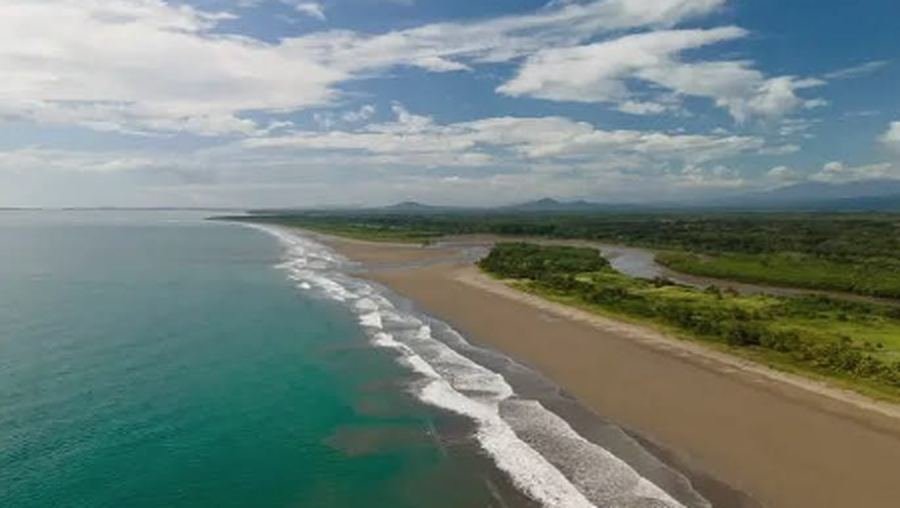
Panama is a small country with two coastlines facing different oceans — and they get their best waves at different times of year. The Pacific side is at its best from about April to October, when swells roll in from the south; the Caribbean side around Bocas del Toro peaks from December to March. Choose the right coast and there is surf somewhere in Panama almost all year. The hard part is not finding waves: it is getting between surf towns that the bus network barely connects, with a board under your arm. Here is where to go, who each spot suits, and how to get there.
Panama’s surf towns at a glance
- Santa Catalina (Pacific): a famous reef point for good surfers and a sandy beach for learners. Best from April to October.
- Playa Venao (Pacific): a consistent beach break in a horseshoe bay, with waves for every level.
- Morrillo and Torio (Pacific): a quiet stretch of the Azuero coast, with a heavy beach break at Morrillo.
- Bocas del Toro (Caribbean): reef breaks around the islands. Best from December to March, with a smaller season from June to August.
Santa Catalina
One of Panama’s best-known waves breaks at the point next to the village. La Punta is a reef point break: the right is the main wave, with a long shoulder, and there is a short, sharp left beside it. It suits upper-intermediate surfers and up, usually works best from mid to high tide, and is the most crowded spot in town when it is on. Close to the village, Playa Estero is a wide sandy beach break with lefts and rights — where beginners take their first lessons and intermediates warm up. Experienced surfers also look for the rocky lefts at Punta Roca and Punta Brava; Punta Brava only works for about an hour either side of low tide.
The main season runs from about April to October, with consistent swells from the south and southwest. From December to March there are still waves, but they are smaller and less predictable. The water is warm all year — a swimsuit and a rash vest are usually all you need.
Getting there: the shuttle from Panama City leaves Casco Antiguo at 9:30 AM and 2:00 PM, drops you at your hotel and costs $70 per person. Tell us when you book that you are bringing a board so we keep the space — and see our Panama City to Santa Catalina guide for how it compares with the bus. On a flat day, the boats to Coiba National Park leave from the village every morning.
Playa Venao
On the south coast of the Azuero Peninsula, past Pedasí, Playa Venao is a horseshoe-shaped bay with a consistent beach break. The middle of the bay has the most power and the sheltered corners are gentler, so surfers of every level share it — beginners at the edges, everyone else at the peak. February to August is usually its best stretch.
Getting there: from Santa Catalina, trips to Playa Venao run on request — tell us your date and group size and we confirm availability and the total price. There is also a shuttle to Pedasí, the nearest town. For the rest of the region, see our Azuero guide.
Morrillo and Torio
Across the water from Santa Catalina, on the western side of the Azuero Peninsula, Morrillo is a long beach with a heavy, fast beach break and a long left at one end of the bay. The main peak is for intermediate and advanced surfers; beginners do better on the sandy inside around high tide. This coast is quiet, with few crowds, and there are more waves within a short drive — including a river-mouth point near Mariato.
Getting there: it looks close to Santa Catalina on the map, but by road it is a long way round. The shuttle from Panama City to Morrillo and Torio goes straight there for $70 per person, leaving from Casco Antiguo at a time we confirm by WhatsApp the day before. Tell us the size of your boards when you book.
Bocas del Toro
On the Caribbean side the surf comes in winter. The main season runs from December to March, with a second, smaller window from June to August that suits learners and intermediates. The breaks are spread around the islands, and water taxis and surf boats from Bocas Town reach most of them:
- Isla Colón: Bluff Beach is a heavy shorebreak, and Paunch is a shallow reef that turns into an experts-only barrel when the swell is big.
- Isla Carenero: Carenero Point peels long lefts in a good swell, a short boat ride from town — expect company.
- Isla Bastimentos: Wizard Beach is the most versatile spot in the archipelago, and Red Frog Beach has soft waves for beginners. Silverbacks, a heavy right-hand reef, only breaks in the biggest winter swells and is strictly for experienced surfers.
Getting there: the shuttle from Boquete includes the water taxi to Bocas Town ($45 per person), and the direct shuttle from Santa Catalina leaves at 7:30 AM and arrives around 3:00 PM ($80 per person). From Panama City you can fly in about an hour, or take the bus from Albrook to Almirante (10 to 11 hours) and a short water taxi.
Two surf trips that work
April to October, Pacific swell: start in Santa Catalina for La Punta and Playa Estero, with a Coiba day when the waves go flat, then carry on to Playa Venao. Morrillo and Torio make a trip of their own, straight from Panama City.
December to March, both coasts: surf the smaller Pacific waves in Santa Catalina, then cross the country on the direct shuttle to Bocas del Toro for the Caribbean season.
Practical tips
- Read the tide. On the Pacific side the tide changes everything, and many breaks only work on part of it. Check a tide table before you paddle out.
- Respect the reef. La Punta and most of the Bocas breaks are over rock or coral and get shallow at low tide — booties help.
- Bring cash. The ATMs in Santa Catalina are unreliable.
- Tell us about your boards. When you book a shuttle, let us know how many boards you are bringing and their size so we can keep the space.
- Cover up. Use reef-safe sunscreen and a rash vest — the tropical sun is strong.