The Best Beaches in Panama: Pacific and Caribbean Compared
Panama is one of the few countries where you can swim in the Pacific at breakfast and the Caribbean at dinner — the isthmus is barely 80 km wide at its narrowest. But the two coasts are nothing alike, and picking the wrong one for what you want is the most common planning mistake we see. Here is the honest breakdown, coast by coast.
The short version: which coast for which traveller
- Want turquoise water and postcard sand? Caribbean — Bocas del Toro or Guna Yala.
- Want waves? Pacific — Santa Catalina or Playa Venao.
- Want empty beach and nobody else? Pacific — Las Lajas.
- Want reef and wildlife? Pacific — Coiba and the Gulf of Chiriquí.
Caribbean side
Starfish Beach (Playa Estrella), Isla Colón. Near Boca del Drago on the main Bocas island, and the calmest water in the archipelago — shallow, clear and genuinely good for small children. The starfish it is named for sit in the shallows; look, photograph, and leave them in the water.
Red Frog Beach, Isla Bastimentos. The most photogenic beach in Bocas: white sand with jungle pressing right up behind it, sloths and monkeys in the trees, and the tiny red frogs that give it the name. You reach it by water taxi and a short walk across the island. One honest warning that the brochures skip: Red Frog has real riptides. There is no lifeguard. Swim where others are swimming and stay close in when the surf is up.
Guna Yala (San Blas). The islands people picture when they picture the Caribbean — palm, white sand, no development, because foreign investment is not permitted in the comarca. Bring your physical passport and cash: there are no ATMs anywhere in the territory.
Pacific side
Santa Catalina. Dark sand, a world-class point break, and the boats to Coiba leaving every morning. Not a lie-on-the-sand beach — a surf and dive base. If you want the swimming version nearby, Playa El Estero is the calmer bay around the corner. Read our Santa Catalina guide for how the town works.
Playa Venao, Azuero. A wide crescent bay with consistent waves at every level, which is why it grew from a fishing cove into the Pacific coast’s liveliest surf town. Dark sand, surf schools for beginners, and hostels through boutique hotels along the back of the beach.
Las Lajas, Chiriquí. More than 10 km of open beach — you can walk for an hour and pass three people. Thatched ranchos for shade, a handful of seafood restaurants, and nothing else. This is the anti-resort beach, and for a lot of travellers it is the best day of the trip.
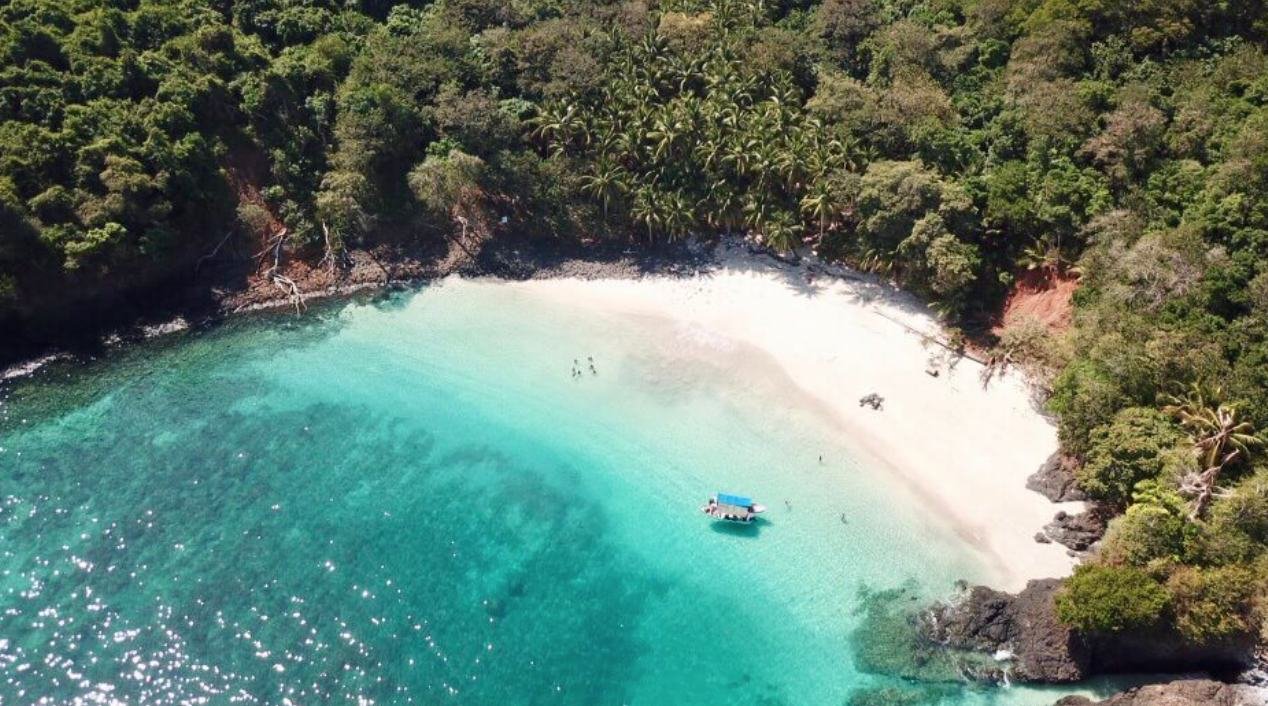
Boca Chica and the Gulf of Chiriquí. The mainland is unremarkable; the islands offshore are not. Short boat rides reach calm turquoise coves with almost no one on them — the aerial shot on our home page is one of them. The best snorkelling on the Pacific side outside Coiba itself.
Coiba National Park. Granito de Oro is a sandbar the size of a tennis court with reef on both sides, and it is the single best snorkel stop in the country. Protected since the island stopped being a penal colony, which is exactly why it still looks like this. See our Coiba day tours.
When to go
The dry season (December–April) gives the calmest seas and clearest water on the Pacific, and it is the safest bet for island days. The Caribbean runs on its own microclimate: September and October are often bright in Bocas while the Pacific side is wet, which is the single most useful piece of timing knowledge for a Panama beach trip.
Getting between them
No rental car needed. Our shuttles connect Panama City, Santa Catalina, Boquete, David, Boca Chica, Las Lajas and Bocas del Toro on one ticket per leg — including the Pacific-to-Caribbean crossing over the continental divide. Prices for every leg are in the route finder.
Getting around Panama
We run shared and private shuttles linking Panama City, Santa Catalina, Boquete, Bocas del Toro, David and more — plus Coiba National Park day tours from Santa Catalina.